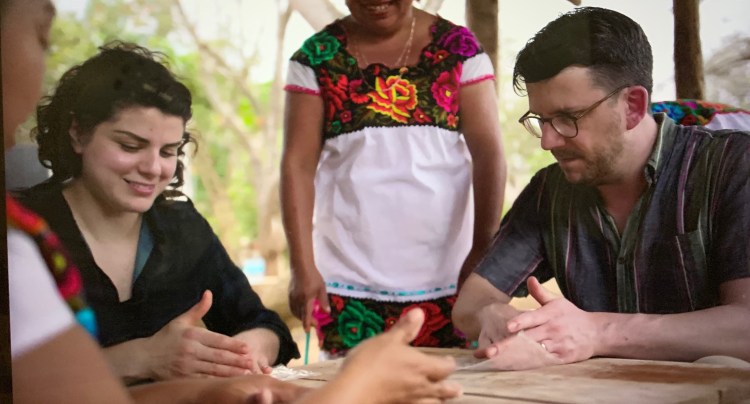
“I want the people going on the trips to have a better understanding not just of the culture[…] because you can’t cook the food without understanding the people” (Arellano 102). Marylin Tausend, said it best– one cannot cook (professionally) without understanding the people. This rings true especially if someone is not a native of the country whose food the wish to specialize in. In the Netflix show, Ugly Delicious, Chefs like Rosio Sanchez who is of Mexican descent, still need to pay homage to Mexico. There is a significant amount of time that focuses on Rosio and Peter Meehan’s emersion into local Mexican cooking in Yaxunah. They had to recognize how things are done without modern appliances and appreciate the people behind the food. But, what is still unsettling is that the two women that were the main cooks in the village were asked to make tortillas at Sanchez’s high-end restaurant, Noma– which caters to tourists. So, for me, this instance blurs the line between helping and insulting Yaxhunah, because tourists are having freshly made tortillas by women of the community, yet they are still dinning in a “sanitized” environment that separates them from being with the people. Similar to the post “Appropriation, Again!,” it is important to recognize a culture food and its people but now, I would like to see more chefs invite all audiences to enjoy their food, not just the privileged ones.
References:
Arellano, Gustavo. Taco USA: How Mexican Food Conquered America. New York: Scribner, 2012. Print. 102
Chang, David, director. Ugly Delicious . Netflix Official Site, 23 Feb. 2018, http://www.netflix.com/watch/80191117?trackId=14170287&tctx=0%2C0%2Cddb8d8b1-b501-4940-9981-0811a010e779-26716971%2C512b7009-7d51-44ee-85a8-08f86fdb6a31_9804926X3XX1582770688256%2C512b7009-7d51-44ee-85a8-08f86fdb6a31_ROOT.
 Authentic Taqueria Only
It’s complicated, right? Yes, of course the return to indigenous foodways and traditions is important and also acknowledging that. I guess the way of thinking about it better is if these famous chefs are using their platform to lift the indigenous community, maybe distributing the profits in equitable ways, or if the women there are not part of the restaurant. I want to give the restaurant the benefit of the doubt, as I think they have a respect for local knowledge of different fruits, veggies, and ways of preparing food. But if that means at the expense of not giving credit where it’s due, well, that’s on old story.
LikeLike