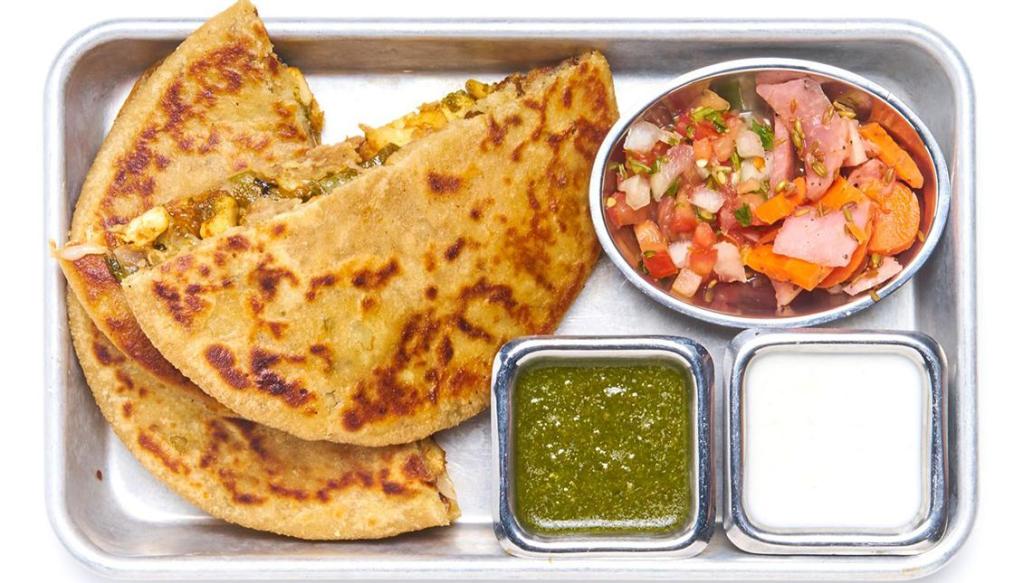
Roti quesadillas, Naan and tortillas… wait, is this Mexican food or Indian food? Well during the late 1800’s and early 1900s Punjabi men immigrated to the United States for work. By 1917 there was an immigration Act that prevented mostly Asians from coming into the country. Therefore, it left Punjabi men in places like Yuba City to mesh with Mexican women, since minorities were barred from marrying whites. Naturally, as the more dual-cultured couple emerged, the food did the same. The women in these marriages were tasked with the mission to preserve the food of her husband while also maintaining their food customs. As a result, foods like curry chicken enchiladas emerged, and a new type of restaurant was in town. El Ranchero was one of the first Punjabi-Mexican restaurants to open and had functioned as just one of many dual-cultures restaurants that served the community.
Citation:
Chopra, Sonia. “California’s Lost (and Found) Punjabi-Mexican Cuisine.” Eater, Eater, 23 Apr. 2019, http://www.eater.com/2019/4/23/18305011/punjabi-mexican-migration-roti-quesadilla-el-ranchero.
García, Beatriz. “The Mexican Punjabis in California Who Turned Quesadillas into a Symbol of Identity.” AL DÍA News, 6 Jan. 2020, aldianews.com/articles/culture/social/mexican-punjabis-california-who-turned-quesadillas-symbol-identity/57241.
 Authentic Taqueria Only
How do you think this differs with, say, how the “new” ingredients from Europe fused with with those of the Americas? That is, how this happens in ways that groups come into contact and their foods begin to meld. It takes many generations, and this article doesn’t necessarily give us that history since this is a small group, but you can detect how things like this begin, and where they could go. In Mexico, with over 500 years and still going of meshing, you can see where time makes the flavors more sophisticated the longer the story of contact.
LikeLike