In a 2016 interview with Jimmy Kimmel, Salma Hayek, a native of Coatzacoalcos, said: “There’s one part of my house(s) that actually does not go from country to country, and that is the kitchen. It’s always Mexican.” To note Hayek has houses across the globe, and the first thing she does before she goes anywhere is to make sure that she can have access to tortillas. As mentioned in prior posts, it’s all about preserving tradition and memories outside the home country. Unfortunately, this is a struggle that many Mexicans have, even in the United States, though there is always a better chance of finding the cooking essentials here than anywhere in the world. Obtaining real Mexican ingredients may be difficult, but luckily, the scope of Mexican has reached so far that there will somehow be a taquería five thousand miles away from Mexico. So, maybe like Laura Patricia Ramírez, it’s up to the induvial to start up Mexican restaurants where there are none.
A waiter comes toward with steaming hot tortillas and puts it before you on a beautiful Talavera plate. And you assume that because they seem so simple, that it is just grilled dough. Wrong. Tortilla making is a science, literally– a lot like titration, and distillation (for tequila), nixtamalization is the process of adding the needed niacin to corn once it is harvested. Without this process, one could contact pellagra due to corn’s deficiency of niacin. The indigenous people of Mexico, therefore, created an alkaline solution of lime and ash, that would allow the kernels to absorb an array of necessary minerals for consumption. Presently, this scientific process has stuck around, especially at Tortillería y Taquería Ramírez, where their mission is to provide traditionally made tortillas– nixtamalizing the corn in-house perpetuating a self-dependent restaurant. This is especially important to the Mexican Community of Lexington, Kentucky that relies on those like Laura Patricia Ramírez to make things feel like home.
Citation:
Arellano, Gustavo. Taco Usa: How Mexican Food Conquered America. New York: Scribner, 2012. Print. 18
Giglio, Frank. “How and Why to Nixtamalize Corn.” Farm & Forage Kitchen, Farm & Forage Kitchen, 29 Oct. 2014, farmandforagekitchen.com/blog/how-and-why-to-nixtamize-corn.
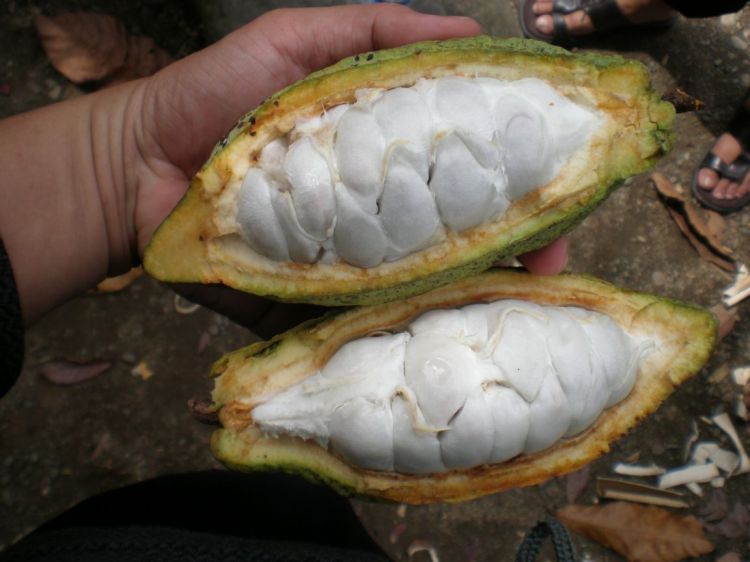
When we think of chocolate, we think of Snickers, M&M’s, Twix, and maybe even Godiva. We taste the sugar and satisfy our cravings, and make cake frosting out of it– delicious. But what we tend to forget is that chocolate is one, a plant, and two, very bitter. Chocolate, as we know it, grows on a tree (it a fruit); if you were to walk past it, you would have no idea what it is. Cacao grows in a football-like cocoon, and inside are numerous white fleshy packets that contain nibs, which will eventually be turned in to chocolate once processed. During the period of the Aztec Empire, the cacao nibs were made into a paste, boiled, and made into cacao water which a garnished with aguamiel, vanilla, and chilies. Come the Spanish Inquisition, this cacao drink was introduced to the conquistadors who were on the prowl for treasures of the New World: “Cortés, ever a vigilant warrior, found cacao fascinating for another reason: in a letter to King Charles V of Spain, he described it as “the divine drink, which builds up resistance and fights fatigue. A cup of this precious drink permits man to walk for a whole day without food” (Arellano 25).
Gustavo Arellano illuminates Cortés’ “discovery” of the cacao plant as a moment of spiritual transcendence and disbelief. For the mere fact that Cortés was obliged to write to the King, it serves a precursor to the appropriation and ownership of the plants found in the New World. If any reasonable person in Spain was to hear of the benefit of treasures such as cacao, they would demand that it be made possible for it to become available at their fingertips. And the ownership of the cacao is what will lead to its “miraculous” appearance in Spanish colonies around the world. The imposition of cacao in places other than Mexico will lead to new leaders in cacao production. Unfortunately, Mexico’s pedestal as the source of all cacao has been forgotten by the world, but that does not mean that their history with the plant has been compromised. Today, the drink Cortés had mentioned to the King still exists, and it is called Champurrado– a chocolate drink made with cinnamon, nutmeg, and masa harina. While the world has ultimately taken advantage of the plant; by adding tons of sugar and other unhealthy additives, Mexico has continued to uphold the traditions of the Aztec people.
Citation:
Arellano, Gustavo. Taco Usa: How Mexican Food Conquered America. New York: Scribner, 2012. Print. 25
The essence of Mexican food is the idea of “coming from scratch” and not some commercialized food that is mass-produced, like Taco Bell or Chipotle. Even though it may be hard to find the original ingredients in America, like maize (ground corn), it’s the care and passion that goes into the food that it the traditional taste. In terms of cultural appropriation, one cannot simply claim themselves as a master chef of Mexican cuisine, because their recipes are stolen and made to be acceptable by high societal standards. Especially, if the culinary education was acquired by observing the local people of Mexico. It is unfair when the credit is taken by non-Mexican people, for their “glorious work”. With such unwarranted controversy surrounding Mexican immigrants, it is an injustice to reject the people yet accept the food (and capitalize on it). I believe that the best thing that those who admire Mexican cuisine can do, is to always give credit to the source in which the recipes come from.


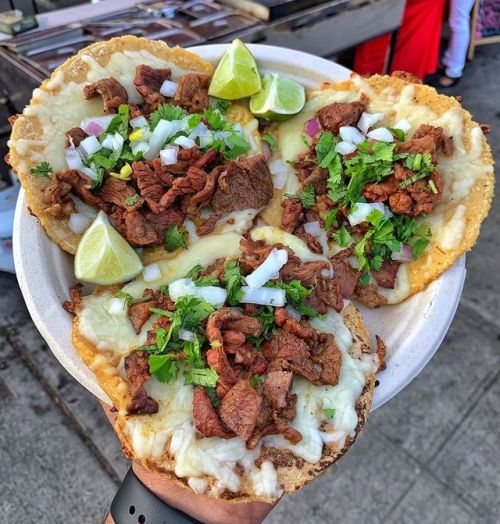
 Authentic Taqueria Only