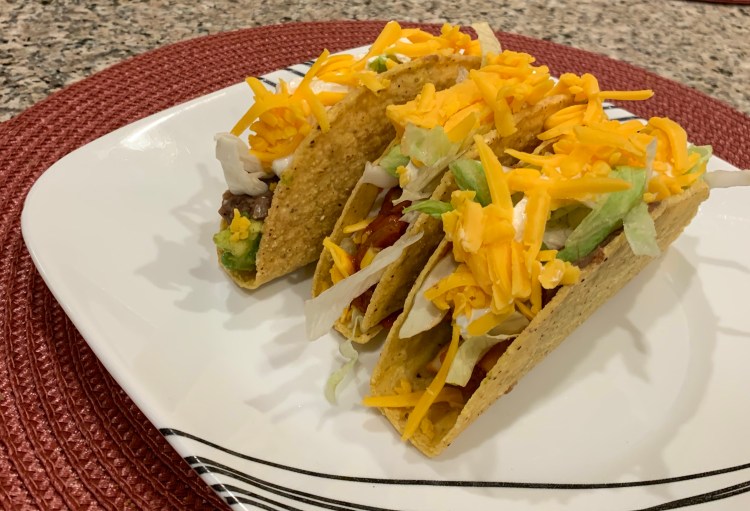
It’s Common Hour in the D’Angelo Center of St. John’s University. Classes have ceased for an hour and a half, and students are hungry. Amongst the eating options is no other than Taco Bell, well known fast-food Mexican chain which has ruled America for decades. The line leading up the register is long and winding. Once you get the order of tacos, your stomach rumbles more and mouth salivates in anticipation. Finally, you sit down and unwrap the thin paper to reveal the tacos, and your expectations fly out the window. This is actually what happened to me, and with the tacos before me, I was deeply saddened. The color of the shell was a faint yellow, and there was barely a line beef inside, and the lettuce was so bitter that it reminded me of black coffee. In terms of taste, it was lifeless– everything tasted generic and commercialized; there was no uniqueness, nothing setting them from more authentic tasting foods. I was disappointed, and I began to think about what people in American think is a “good tasting taco”– the line at St. John’s was long and Taco Bell has a cantina-style restaurant on 8th avenue in Manhattan. So, does this mean that people think that these tacos are really worth it? Gustavo Arellano is a proponent of real Mexican cuisine attests to what a good “taco environment” should look like through his observation at the Milta Café in Southern California: “When a customer asks for a hard-shelled taco with ground beef, the order is repeated in Spanish– taco dorado con carne molida. A cook grabs a corn tortilla, places it in a canister, and fries it. No prefabricated mess here– it the real deal, the opposite of what Bell envisioned… The Taco Bell is dead. Long live the taco” (Arellano 70). This experience does not exist at Taco Bell. The same way you should avoid a restaurant that uses tortillas from a prepackaged bag is the same way you should avoid a restaurant that has prepackaged taco shells. The experience that Gustavo is describing is one that encompasses what more and more Americans want in a Mexican restaurant– a feeling like home. Across all cultures, everyone has a vision of a parent or adult making food from scratch before their eyes. Therefore, when a cook is seen taking tortillas out of a bag it gives the impression that the consumer can do the job themselves– which defeats the purpose of a restaurant. Besides, Taco Bell has distanced themselves by getting rid of the Spanish names for the items its menu. The lack of Spanish based names represents that will never an authentic Mexican restaurant that works to immerse the customer into the culture. So, to me Taco Bell is dead, has been so Americanized and appropriated that its flavors cannot be connected to what a taco is supposed to be. So, the next time you want to visit a Taco Bell, remember, your taste buds deserve better!
References:
Arellano, Gustavo. Taco USA: How Mexican Food Conquered America. New York: Scribner, 2012. Print. 70
 Authentic Taqueria Only